기치
  • Sheet Metal vs CNC Machining: A Guide to Choosing the Right Method for Your Metal Parts Jan 28, 2026
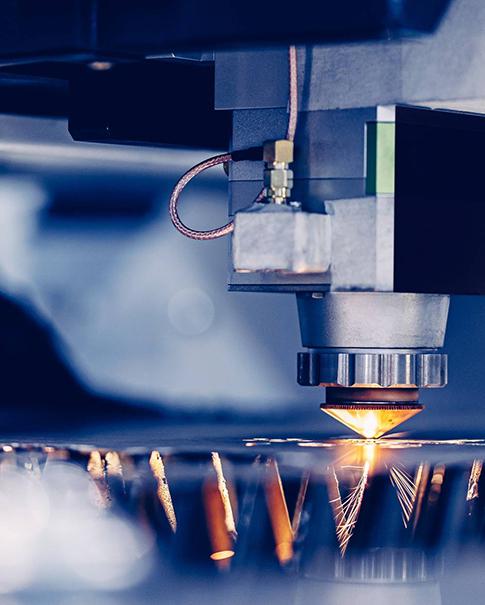
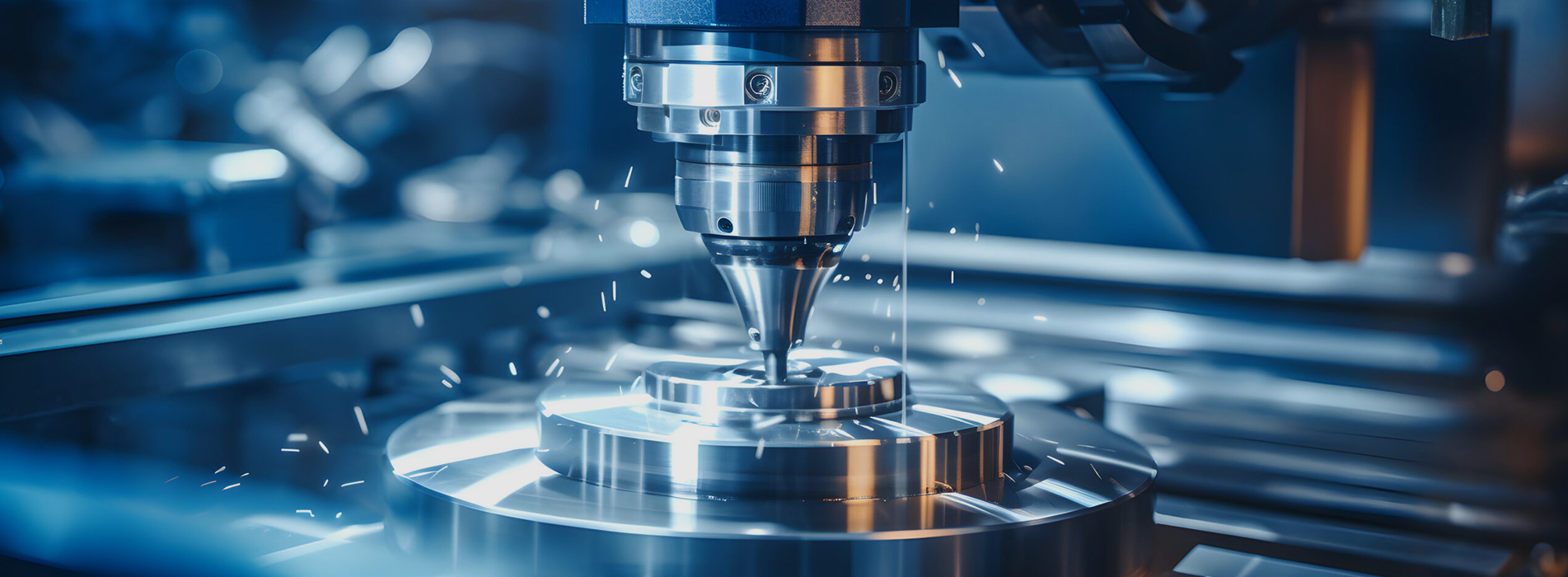
    When it comes to fabricating metal parts, people often face the dilemma of choosing between sheet metal fabrication and CNC machining. Each method offers unique advantages, and the decision depends on various factors such as part complexity, precision requirements, cost considerations, and production volume. In this article, we will delve into the characteristics of sheet metal fabrication and CNC machining, helping you make an informed decision on the optimal method for your specific metalworking needs.     What is Sheet metal fabrication   Sheet metal fabrication is a manufacturing process that involves shaping and forming flat sheets of metal into finished products or components. The sheets can be made of various metals, including steel, aluminum, brass, copper, and others. The process typically includes cutting, bending, and assembling the sheet metal to create the desired shape or structure.   Here are the basic steps involved in sheet metal fabrication:   1. Cutting:Sheets of metal are cut into the required size and shape using various cutting tools such as shears, laser cutting machines, or CNC plasma cutters.     2. Bending:The cut sheets are then bent into specific angles or curves using press brakes or other bending tools. This step helps create the desired three-dimensional shape.     3. Forming:Additional forming processes may be applied to create features such as flanges, beads, or embossing on the sheet metal.     4. Joining: Sheets are joined together through welding, fasteners, or adhesives to assemble the final product. Welding is a common method for creating strong and durable connections.     5. Finishing:The fabricated product may undergo finishing processes such as painting, powder coating, or surface treatments to enhance its appearance and protect it from corrosion.     Sheet metal fabrication is widely used in various industries, including automotive, aerospace, construction, electronics, and more. It allows for the production of a wide range of products, from simple brackets to complex machinery components. The precision and versatility of sheet metal fabrication make it a popular choice for manufacturing durable and customized metal parts.       What is CNC machining?   CNC machining, or Computer Numerical Control machining, is a manufacturing process that utilizes computerized controls and automated machinery to precisely remove material from a workpiece to create a finished part. The CNC machining process involves the use of computer-aided design (CAD) and computer-aided manufacturing (CAM) software to generate a detailed design and convert it into a set of instructions for the CNC machine. These instructions are then translated into precise movements of cutting tools and other machining processes.     Factors Influencing the Choice:   a. Part Complexity and Precision: - For simple to moderately complex parts with good precision, sheet metal fabrication may be the optimal choice. - If your project requires intricate details and high precision, CNC machining is the preferred method.   b. Cost Considerations: - Sheet metal fabrication tends to be more cost-effective for large production runs of simpler parts. - CNC machining may incur higher costs, especially for complex components and smaller production quantities.   c. Lead Time and Production Volume: - Sheet metal fabrication generally offers shorter lead times for simpler parts, making it efficient for high-volume production. - CNC machining may have longer lead times but is suitable for lower production volumes and prototyping.   4. Material Considerations: Sheet Metal Fabrication: Primarily used with sheet metals like steel, aluminum, and stainless steel. CNC Machining: Can work with a broader range of materials, including metals, plastics, and composites.   5. Combining Methods for Optimal Results: Many manufacturers find success in combining sheet metal fabrication and CNC machining to leverage the strengths of each method. For example, sheet metal can be used for cost-effective bulk production, while CNC machining can produce precise prototypes or intricate components.   Conclusion:   In the dynamic world of metalworking, choosing between sheet metal fabrication and CNC machining is a crucial decision that impacts the quality, cost, and efficiency of your project. By considering factors such as part complexity, precision requirements, cost considerations, and production volume, you can make an informed choice that aligns with your specific needs. Whether you opt for the cost-effective efficiency of sheet metal fabrication or the precision of CNC machining, understanding the strengths of each method will undoubtedly lead to successful metal part production.  
  • Sheet Metal vs CNC Machining: A Guide to Choosing the Right Method for Your Metal Parts Feb 09, 2026
    When it comes to fabricating metal parts, people often face the dilemma of choosing between sheet metal fabrication and CNC machining. Each method offers unique advantages, and the decision depends on various factors such as part complexity, precision requirements, cost considerations, and production volume. In this article, we will delve into the characteristics of sheet metal fabrication and CNC machining, helping you make an informed decision on the optimal method for your specific metalworking needs. What is Sheet metal fabrication   Sheet metal fabrication is a manufacturing process that involves shaping and forming flat sheets of metal into finished products or components. The sheets can be made of various metals, including steel, aluminum, brass, copper, and others. The process typically includes cutting, bending, and assembling the sheet metal to create the desired shape or structure.   Here are the basic steps involved in sheet metal fabrication:   1. **Cutting:** Sheets of metal are cut into the required size and shape using various cutting tools such as shears, laser cutting machines, or CNC plasma cutters.     2. **Bending:** The cut sheets are then bent into specific angles or curves using press brakes or other bending tools. This step helps create the desired three-dimensional shape.     3. **Forming:** Additional forming processes may be applied to create features such as flanges, beads, or embossing on the sheet metal.     4. **Joining:** Sheets are joined together through welding, fasteners, or adhesives to assemble the final product. Welding is a common method for creating strong and durable connections.     5. **Finishing:** The fabricated product may undergo finishing processes such as painting, powder coating, or surface treatments to enhance its appearance and protect it from corrosion.     Sheet metal fabrication is widely used in various industries, including automotive, aerospace, construction, electronics, and more. It allows for the production of a wide range of products, from simple brackets to complex machinery components. The precision and versatility of sheet metal fabrication make it a popular choice for manufacturing durable and customized metal parts.       What is CNC machining?   CNC machining, or Computer Numerical Control machining, is a manufacturing process that utilizes computerized controls and automated machinery to precisely remove material from a workpiece to create a finished part. The CNC machining process involves the use of computer-aided design (CAD) and computer-aided manufacturing (CAM) software to generate a detailed design and convert it into a set of instructions for the CNC machine. These instructions are then translated into precise movements of cutting tools and other machining processes.     Factors Influencing the Choice:   a. Part Complexity and Precision: - For simple to moderately complex parts with good precision, sheet metal fabrication may be the optimal choice. - If your project requires intricate details and high precision, CNC machining is the preferred method.   b. Cost Considerations: - Sheet metal fabrication tends to be more cost-effective for large production runs of simpler parts. - CNC machining may incur higher costs, especially for complex components and smaller production quantities.   c. Lead Time and Production Volume: - Sheet metal fabrication generally offers shorter lead times for simpler parts, making it efficient for high-volume production. - CNC machining may have longer lead times but is suitable for lower production volumes and prototyping.   4. Material Considerations: Sheet Metal Fabrication: Primarily used with sheet metals like steel, aluminum, and stainless steel. CNC Machining: Can work with a broader range of materials, including metals, plastics, and composites.   5. Combining Methods for Optimal Results: Many manufacturers find success in combining sheet metal fabrication and CNC machining to leverage the strengths of each method. For example, sheet metal can be used for cost-effective bulk production, while CNC machining can produce precise prototypes or intricate components.  
  • ABS vs Polycarbonate: Which Plastic Is Better for CNC Machining Service? Feb 09, 2026
    ● Choose ABS for lower cost, faster machining, and stable tolerances (non-transparent parts). ● Choose PC for impact resistance and transparency, but expect higher machining risk and cost. ● For thin walls + tight tolerances, ABS is usually safer. ● For clear guards/windows, PC is the only practical option (often needs polishing).   This guide compares ABS and polycarbonate specifically from a CNC machining perspective, helping engineers select the right plastic based on machining behavior, tolerance risk, and end-use requirement ABS vs Polycarbonate for CNC Machining — Quick Definition ABS is a cost-effective, easy-to-machine thermoplastic widely used for CNC-machined housings, brackets, and functional parts where dimensional stability and surface finish are more important than transparency or extreme impact strength.   Polycarbonate (PC) is a high-impact, transparent engineering plastic used for CNC-machined guards, covers, and structural components, requiring stricter control of heat and cutting stress to avoid distortion or cracking.   Quick Comparison: ABS vs PC for CNC Machining Quick Takeaways: ABS: Lower cost, easier machining, and better dimensional stability for most non-transparent parts. Polycarbonate (PC): Higher impact resistance and optical transparency, but more prone to stress whitening, cracking, and heat-related distortion if parameters are not controlled. Choose ABS when: cost, speed, and stable tolerances are the priority. Choose PC when: transarency or impact resistance is a hard requirement, and the process can support more conservative cutting and fixturing.   The table below summarizes the key CNC machining differences between ABS and polycarbonate, focusing on machinability, tolerance control, surface finish, and cost impact.   ABS vs Polycarbonate for CNC Machining: Comparative Analysis If machining speed and cost dominate, ABS usually wins.   If impact resistance or transparency is non-negotiable, PC becomes necessary despite the higher machining risk.   Factor ABS Polycarbonate (PC) Machinability Easy to cut and stable Harder to cut, higher cutting forces Tool Wear Low, forgiving on tools Higher wear with aggressive settings Heat Sensitivity Softens if the feeds are too slow Builds internal stress from heat Risk During Machining Smearing and edge melt Cracking, stress whitening Surface Finish Smooth, matte finish Clear or glossy but harder to polish Tolerance Control Good for general tolerances Challenging for thin or tight features Cost Sensitivity Lower material and machining costs Higher material and processing cost Typical CNC Use Housings, brackets, prototypes Guards, covers, impact-resistant parts   CNC Machinability and Stability: ABS vs Polycarbonate CNC Machining Behavior ABS and polycarbonate behave very differently under CNC cutting forces and heat, which directly affects machining stability and process reliability.   ABS is generally forgiving during machining. It tolerates higher cutting speeds and more aggressive toolpaths with a lower risk of stress cracking. Chips evacuate cleanly, cutting forces remain stable, and the material dissipates heat relatively evenly. This makes ABS suitable for complex geometries and repeated production runs without tight process tuning.   Polycarbonate is more sensitive to localized heat and stress concentration. During CNC machining, internal stress tends to accumulate rather than dissipate, especially near sharp internal corners or thin sections. If feeds, speeds, or tool geometry are not carefully controlled, polycarbonate may show edge whitening, surface cracking, or post-machining distortion.   As a result, machining polycarbonate typically requires reduced cutting speeds, sharp tools, conservative depths of cut, and carefully planned toolpaths to maintain consistency and avoid damage.   Dimensional Stability After Machining Dimensional stability refers to a machined part’s ability to maintain its intended geometry after cutting forces are removed and clamping is released. Loss of dimensional stability typically manifests as warping, bowing, or delayed deformation after machining.   ABS generally maintains dimensional stability well. Its lower sensitivity to residual stress allows parts to relax more uniformly once unclamped, reducing the risk of warping in thin walls or large flat areas.   Polycarbonate, while mechanically stronger, is more prone to internal stress buildup during machining. If cutting heat, tool pressure, or uneven clamping is not well controlled, this internal stress can release after machining, leading to warping, edge curl, or stress whitening. Proper fixturing, conservative cutting parameters, and uniform wall thickness are essential to minimize these risks.   Surface Finish, Cosmetic Quality, and Cracking Risk Surface appearance and cosmetic expectations differ significantly between ABS and polycarbonate.   ABS supports aggressive finishing passes and produces smooth, matte surfaces with minimal post-processing. It machines cleanly and is well-suited for visible housings, enclosures, and painted or textured parts. Minor tool marks are easy to remove with light finishing.   Polycarbonate requires more controlled finishing, especially for clear or optical parts. Tool marks, scratches, or stress whitening are more visible due to transparency. Clear polycarbonate often needs careful polishing, buffing, or coating to meet cosmetic or optical standards.   While both materials can show surface defects if machining parameters are incorrect, polycarbonate demands tighter control to preserve clarity and long-term appearance.                                            
1 2 3 4 5 6 7
7페이지

도움이 필요하신가요? 우리와 채팅

메시지를 남겨주세요
정보나 기술 지원을 요청하려면 양식을 작성하세요. 별표*가 표시된 모든 필드는 필수입니다.
제출하다
찾는 중 FAQs?
문의하기 #
+86 15375471059

영업 시간

월요일: 오전 9시~오전 12시, 오후 2시~오후 6시

화요일: 오전 9시~오전 12시, 오후 2시~오후 6시

수요일: 오전 9시~오전 12시, 오후 2시~오후 6시

목요일: 오전 9시~오전 12시, 오후 2시~오후 6시

금요일: 오전 9시~오전 12시, 오후 2시~오후 6시

(위의 시간은 모두 중국 시간입니다)

업무 시간 외에 이메일을 보내주시면 비즈니스 담당자를 배정해 서비스를 제공해 드리겠습니다.

제품

왓츠앱

문의하기